
Rivers and Lakes of Russia: A Journey into the World of Water
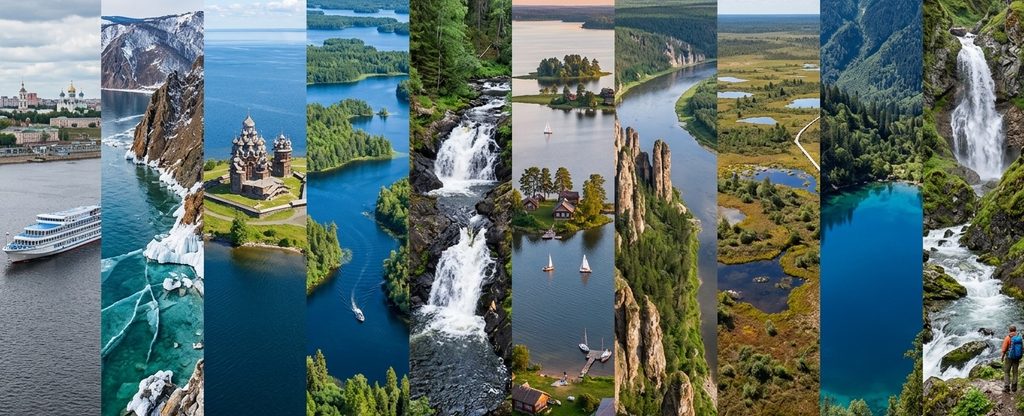
Water is more than a natural resource.
It is the beginning of life, a source of wonder, and a powerful force that shapes the world around us. A river flowing through an endless landscape, a lake hidden among forests, the first morning light reflected on still water — each offers a moment to pause, observe, and discover something new.
Russia has an extraordinary diversity of freshwater landscapes, from the great rivers of Siberia to the ancient depths of Lake Baikal, from quiet forest lakes to remote Arctic waterways. Every region reveals a different relationship between water, nature, and human life.
For people from the Global South, including those who live in places where fresh water is scarce, exploring Russia’s rivers and lakes can offer a fresh perspective on this essential element. This is not simply a journey across a map. It is an invitation to rediscover water as a source of life, inspiration, and connection.
Rivers: The Living Arteries of a Continent
Russia’s rivers have shaped its landscapes, settlements, cultures, and history. The Volga, Ob, Yenisei, Lena, and Amur each have their own character and rhythm.
The Volga winds through the heart of European Russia, linking cities and communities along its banks. Farther east, the great Siberian rivers travel across immense territories of taiga and tundra. In spring, their waters spread across vast floodplains; in summer, they mirror the open sky. Along their courses, water sustains forests, wetlands, wildlife, and human communities.
To encounter these rivers is to experience the scale of a continent — and to see how a single element can connect distant places and different ways of life.
Water does not recognize the boundaries we draw on maps. It flows through landscapes, links ecosystems, and reminds us that the natural world is deeply interconnected.
Rivers in the cultural code
The rivers and lakes of Russia are more than vast expanses of water and hidden depths — they are an enduring source of inspiration. Their images flow through music, literature, painting, and folk traditions, becoming part of the country’s cultural memory. Water is not only something to see and experience; it can also be heard, read about, and discovered through art.
Table of Content
- The Volga River: Russia’s Great Waterway
- Lake Baikal: The Deepest Lake on Earth
- Lake Ladoga: Europe’s Largest Lake
- Karelia’s Lake District: A World of Water and Forests
- The Kivach Waterfall: A Natural Wonder of Karelia
- The Seliger Lakes: Islands, Forests and Quiet Shores
- The Lena River: A Journey Through the Wilds of Siberia
- The Vasyugan Swamp: An Ocean of Siberian Wetlands
- The Blue Lakes of Kabardino-Balkaria: Nature’s Hidden Depths
- Remarkable Russian Waterfalls Beyond the Famous Routes
The Volga River: Russia’s Great Waterway
The Volga River is more than just the longest river in Europe; it is an artery that has connected peoples, cities, and eras for centuries. To a reader accustomed to water scarcity, the Volga might seem almost unbelievable: its basin collects water from over a million square kilometers, and the river itself contributes up to 80% of the total river discharge flowing into the Caspian Sea.
The Volga originates in the Valdai Hills, carrying its waters through forests, forest-steppes, and steppes toward the Caspian. Along the way, it is joined by hundreds of tributaries, the largest of which is the Kama. Here, things get interesting: from a hydrological perspective, the Kama is actually more voluminous than the Volga at their confluence—technically, it is the Kama that flows into the Caspian. Yet, history and culture have dictated otherwise: the Volga remains the «Mother» river.
In Russia, rivers are often viewed as transport arteries or sources of energy. The Volga serves both roles; it hosts a cascade of hydroelectric power plants, while its waters irrigate fields and sustain cities. In recent years, however, the focus has shifted from exploitation to restoration, with federal projects now aimed at purifying wastewater, clearing riverbeds, and revitalizing the ecosystem.
Russia’s lakes and rivers are inextricably linked. The Volga empties into the Caspian Sea—a unique, landlocked body of water often classified as a lake because it has no outlet to the ocean. This is just one of many reasons why the Volga deserves a journey of its own.
In this long-read, we will delve deeper: we’ll examine which river is truly the «main» one in the Caspian basin, explore the paleontological past of the Volga region, and look at the efforts currently underway to save this great river.
Lake Baikal: The Deepest Lake on Earth
Lake Baikal is famous for being the oldest, clearest, and the deepest lake on earth, holding around 20% of the planet’s unfrozen fresh water. But beyond the staggering numbers, Baikal is a living, breathing ecosystem that defies imagination. From the mysterious rhythmic hum of its thick winter ice to the prehistoric species found nowhere else in the world, it offers a profound experience for travelers seeking the raw, untamed beauty of Siberia. Ready to look through the world’s most transparent ice and hear the voice of the ancient lake?